
Metal Surface Treatment: Pickling and Passivation

Stainless steel pickling and passivation are essential metal surface treatment processes used to improve corrosion resistance and ensure the durability of parts. This process consists of treating the metal surface to remove contaminants during the pickling phase, followed by the formation of a protective layer. These operations are carried out after manufacturing, particularly following welded mechanical fabrication processes, in order to restore the properties of the metal.
Within our industrial metalworking workshop in Vendée, AMIAUD performs stainless steel pickling and metal passivation operations for technical parts intended for demanding environments, particularly in industry, marine applications, and other constrained environments.
⌂ → Metalworking Workshops → Pickling and passivation
Expertise in stainless steel
pickling and passivation
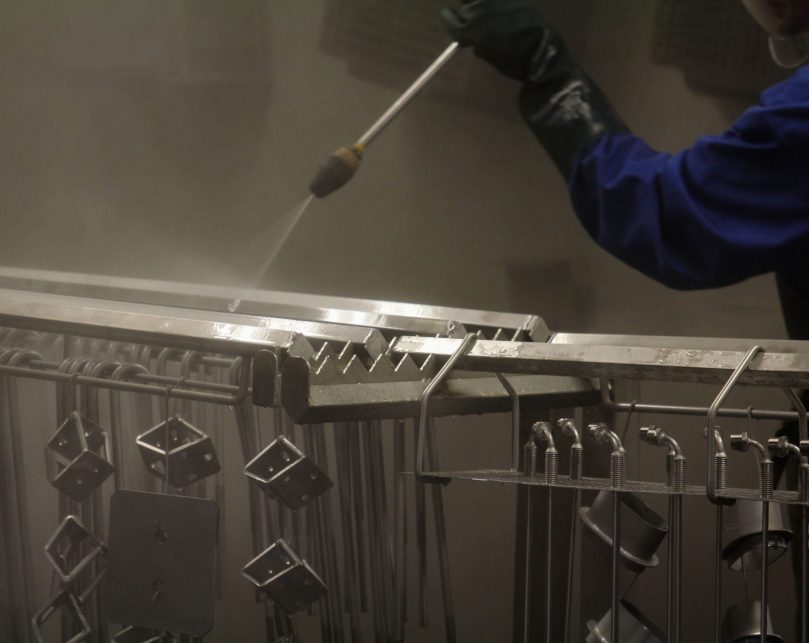
Stainless steel pickling consists of removing impurities and welding marks present on the surface of metal parts. This step is essential to ensure the effectiveness of the stainless steel passivation treatment.
Metal passivation then allows a natural protective layer to reform on the surface of the stainless steel. This layer improves corrosion resistance, limits oxidation phenomena, and extends the service life of the parts, particularly in humid or aggressive environments.
Equipment adapted
to Metal Surface Treatment
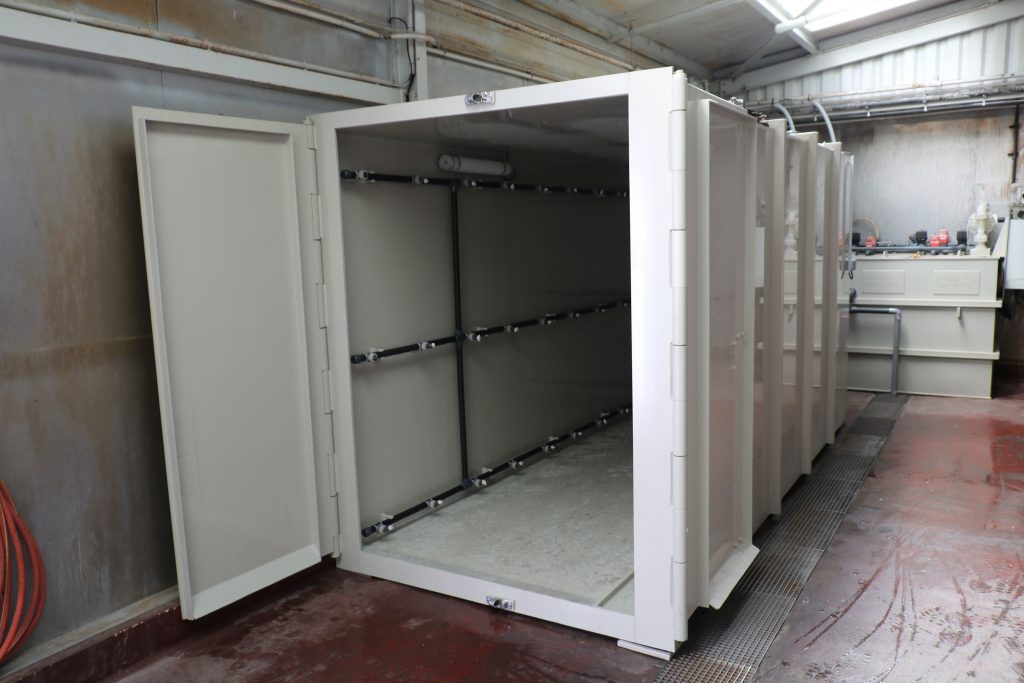
Our industrial workshop is equipped to carry out stainless steel surface treatment operations under optimal conditions. We notably operate a large-capacity passivation tank (1950 × 3900 × 1500 mm), enabling us to process large-sized parts.
We also use a mobile electric passivation unit, providing high flexibility for specific parts or particular technical constraints. This organization allows us to adapt to the requirements of each project while ensuring treatment efficiency and quality.
A key step After Metal Part Manufacturing
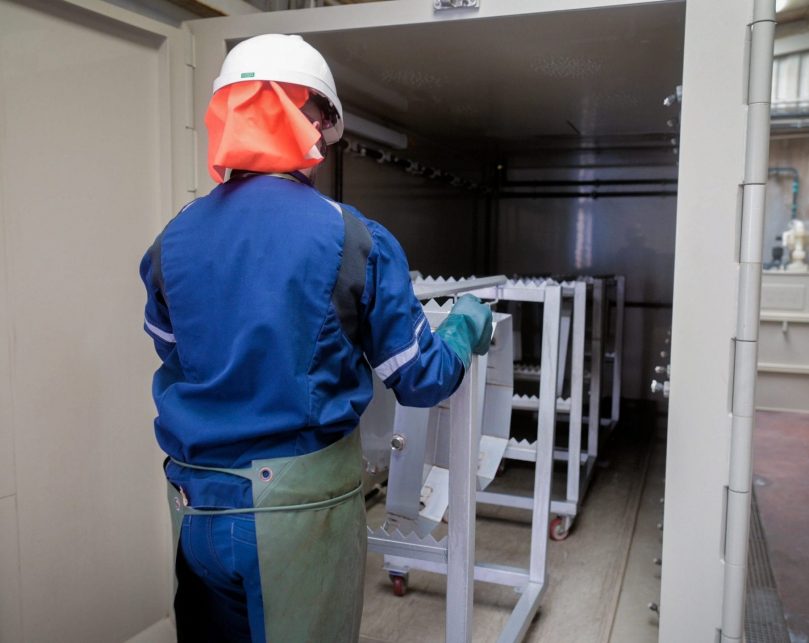
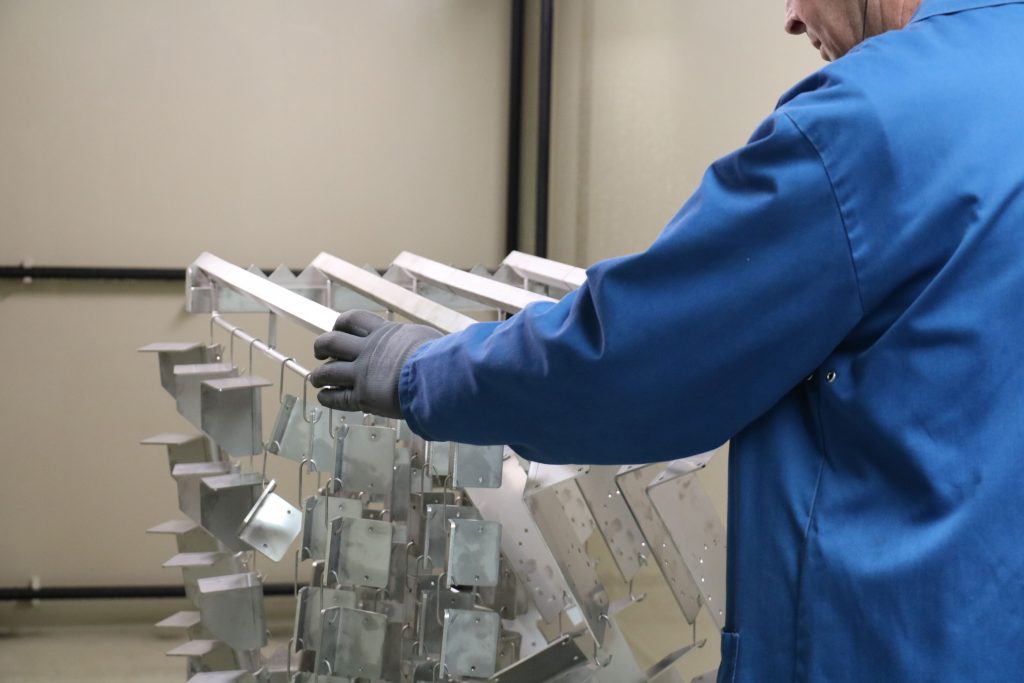
Stainless steel pickling and passivation are generally carried out after manufacturing operations such as welded mechanical fabrication, laser cutting, or industrial bending. These treatments help ensure the cleanliness, compliance, and durability of metal parts.
This process is particularly recommended for stainless steel parts intended for demanding environments where hygiene and corrosion resistance requirements are high.
Application sectors
for passivation
- Industry
- Automotive
- Interior fitting and layout
- Food processing industry
- Agricultural sector
- Construction
- Defense
- Medical
- Robotics
- Machinery manufacturing
- Luxury industry
- Aerospace
- Railway industry
- Funeral
This diversity of applications enables us to meet a wide range of technical and regulatory requirements.
An Integrated Solution
Within Our Metal Processing Chain
Stainless steel passivation is fully integrated into our metal processing chain. This integration enables us to provide a complete solution, from manufacturing to finishing, without intermediaries.
As a result, we control the entire process, ensuring consistency, quality, and responsiveness in the execution of your projects.
A Company Specialised in
Stainless Steel Surface Treatment in France ?
Are you looking for a stainless steel pickling and passivation solution to improve the durability of your metal parts?
AMIAUD supports you with solutions tailored to your technical requirements.
AMIAUD is a metalworking company recognized for its expertise in metal surface treatment and industrial part manufacturing. Our organization enables us to combine laser cutting, bending, welded mechanical fabrication, and passivation within a comprehensive industrial approach.
This complete control of the process allows us to provide reliable, durable solutions adapted to each customer’s specific constraints.
THEY TRUST US